What Is Growth Mindset? Explained By A Hiker
I have a picture from 2016. In it is a younger, bright-eyed, and bushy-tailed version of a girl I once knew. Blonde hair bleached from the sun, sitting in her Jeep with a dog named Tucker. The white full-blooded mutt is a dead giveaway that this girl is a past version of me, with slightly less sun damage to the face. A gal pal is sitting next to me in the passenger seat, smiling as well for the phone camera. We wanted a selfie of us before and after our major excursion to a campsite near McAfee Knob, Virginia, our very first steps on the Appalachian Trail. We were still fairly new to the South at the time, both having moved to North Carolina for work. And we wanted to experience what the famous trail. So we loaded our far-too-heavy-for-a-single-overnight backpacks, at 30 pounds each, and walked the very lengthy three miles to the overnight campsite. It felt like quite the excursion and we felt badass & ballsy for doing something so extreme.

The Picture, AT Trail, Virginia
The Before Photo that Never Became an After
We came back to the Jeep the next day. The full packs and the second 3-mile day had completely wrecked us. We were smoked. The “after” of the Before/After photos forgotten. My feet ached, my legs wobbled, and the only one that begged for more was the dog. I barely stayed awake for the drive home and couldn’t fathom doing something even larger. Doubt crept in through my exhaustion that maybe my larger backpacking dreams were a bit far reaching.
And yet.
By 2019, I had completed 1800 miles across New Zealand by foot. And it was brain science that got me there.
What Hiking Teaches us About the Brain
Hiking is one of the most affordable and accessible sports for anyone interested in the outdoors (pending a few mobile exceptions). Depending on the trail, you usually only require three things: a map/marker, shoes, and time. With no real line between walking and hiking, everyone knows how to do it. Dirt trails, urban trails, lake trails, forested trails, paved trails, there’s something for everyone. But there’s ONE limitation everyone faces. How far can I go?
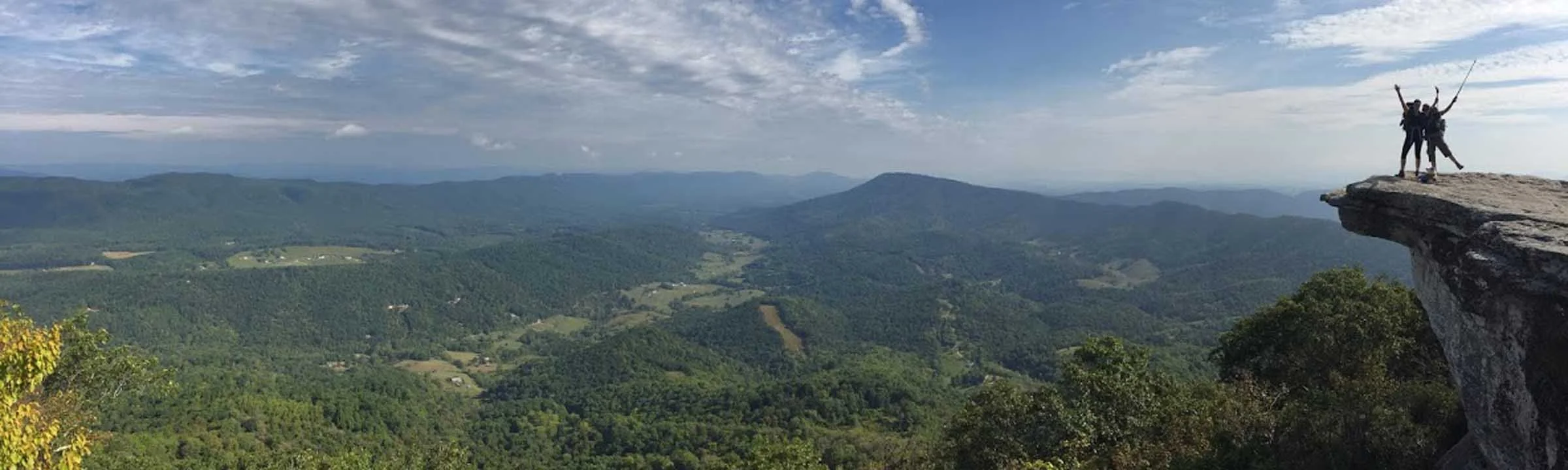
On the Top of McAffee Knob, Appalachian Trail, Virginia
My 6 miles there-and-back over two days felt HUGE to me in that moment, and there are certainly people who would agree. Yet, while I was long in my tent by the end of the first night, I was surrounded by AT (Appalachian Trail) hikers who had just come off another 15-20-mile day in the last several weeks. They thought my day was minuscule from their own perspective. Yet, my mindset at the time was fixed on what a “big” hiking day meant to me. My perception was my reality, their perception was theirs.
Plenty of people would even agree my max walking distance was reasonable, and two 3-mile days would seem immense. Let’s frame this in a common context. Many have heard of the 10,000 steps a day challenge, a very popular fitness challenge. In distance, 10,000 steps is approximately 4 to 5 miles for the average person’s gait. But the National Library of Medicine reports the average adult takes only 6,500 steps a day. That is about 3 miles. And every one of those steps includes your walk to work, the car, the kitchen, the grocery store, and taking the dog outside. Very little is left for fitness or recreation after your daily life has spent all its footfalls.
But the funny thing about hiking (walking) is its an innate exercise we’ve had since infancy. The barrier to entry is that low. In order to be better at it, all you have to do is do more of it.
The catch? Your brain has to want to.
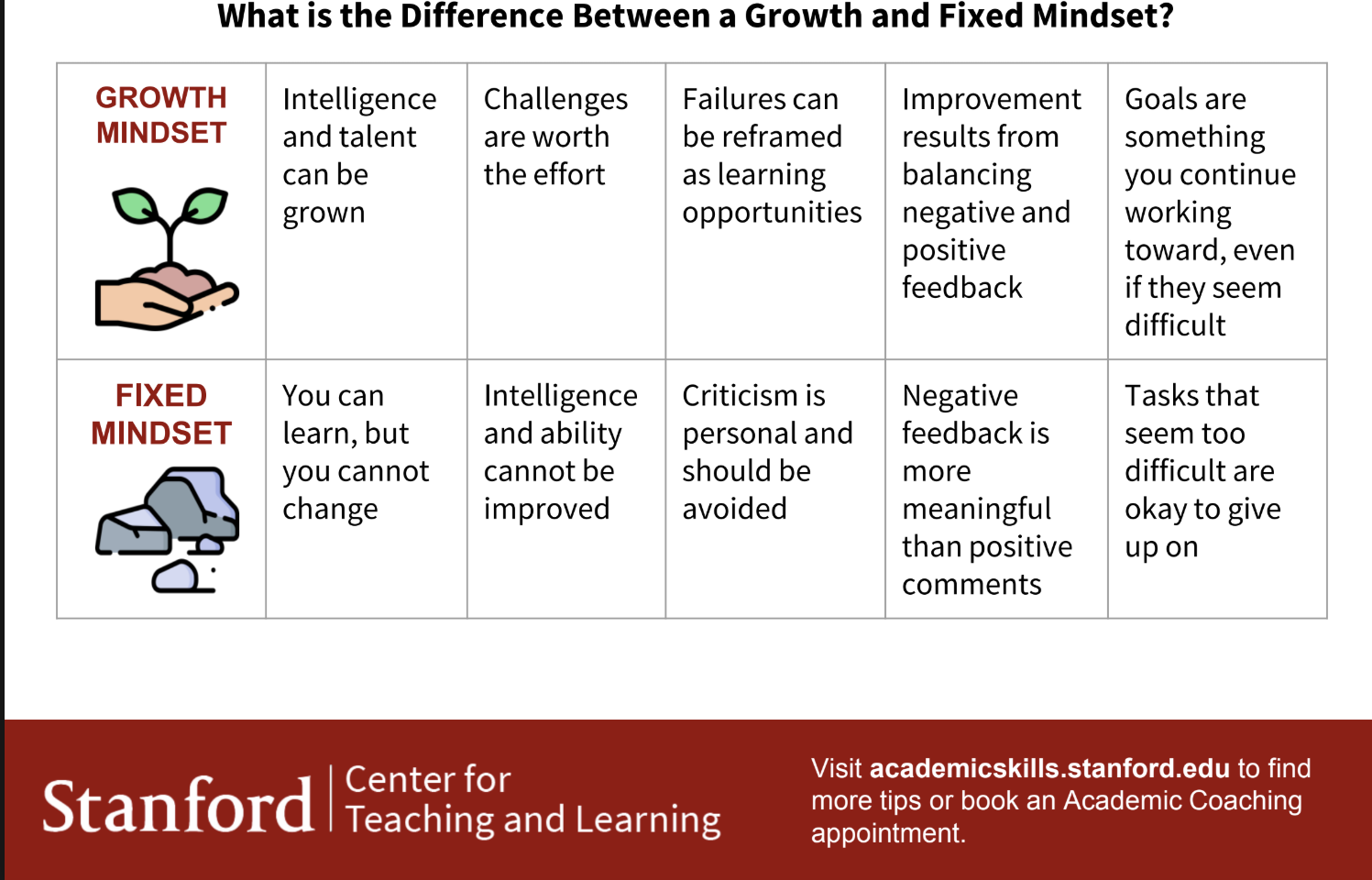
Your thoughts have to tell you that you want change, and you believe you can do more. Through boredom or exhaustion, you can always still walk, but you have to believe you aren’t stuck in your current range and have the drive to push through. The mindset in your brain must grow what you perceive as achievable. That is the difference between a fixed mindset and a growth mindset. Hiking, it turns out, can help us better understand how our brains perceive our ability to change, grow, and improve. By understanding this brain function, we can learn how to exercise a growth mindset rather than a fixed mindset in other areas of our lives, from rock climbing to relationships.
Defining Growth Mindset
So what is Growth Mindset? Established by Dr. Carol Dweck in 2006 in her book Mindset: The Psychology of Success, Growth Mindset is the belief that any skillset or attribute you have can be developed or improved through learning. This contrasts with a fixed mindset, where one believes that one is born with one's own limitations. This quote from Carol Dweck’s book I think says it best:
"In a growth mindset, challenges are exciting rather than threatening. So rather than thinking, oh, I'm going to reveal my weaknesses, you say, wow, here's a chance to grow." - Dr. Carol Dweck, Stanford University
When I first read the book back in 2015, I distinctly remember the example she gave of a young girl musician. (It resonated with me because I was once myself, a violin player, terrified of performing on stage in public which I now project onto Karaoke night). In Dweck’s example, she compares how this young girl’s mindset would impact her future in music. If the girl maintains a fixed mindset, she may believe that her mistakes on stage define the limits of her musical skills and that practice will not make the stage act any easier. If the girl has a growth mindset, she may treat the mistakes in her stage act as learning moments and reflect on them to identify what to improve. That constant process of evaluating and improving can lead her to a fairly competitive act to get her into Juilliard.
My own music career ended with my fixed mindset, but my academic and outdoor recreation careers have not, which leads to my second point about Growth Mindset. Your Fixed vs. Growth mindset can shift throughout different elements of your life. Someone can have a growth mindset at work, resulting in rapid promotions, but a fixed mindset toward marriage, leading to struggles in their marriage or in understanding their spouse. Entrepreneurship, sports, creative arts, and parenting all can be enhanced through a simple shift from a fixed to a growth mindset. Some may come more naturally to you than others, but applying a growth mindset is a tool that can help your “talent” in any era.
Defining Our Distance and How Far We Go
Dweck argued that “talent” is not limited or innate. To me, that requires clarification. There are limitations we can’t control. Like how you “prove” you’re talented is a big one. You may develop very strong basketball skills, but other elements of age, training time, prior injuries, and even other pursuits can all prevent you from making it to the NBA.
But Growth Mindset isn’t about being the best or the most talented anyway. The key is that you can build talent at all. Are you someone that’s ever said this to yourself:
“I’m not great at anything, but I’m good at a lot of things.” or “Jack of All Trades. Master of None”
Then you probably use a growth mindset without even knowing it. You find ways to evaluate and improve and take feedback as a lesson or even a challenge rather than a criticism. You find interest in things, rather than barriers, and you explore those avenues to grow your own repertoire. Who knows? Maybe after all that experimenting and trying and growing, you might find yourself part of the greats.
Take it back to the hiking metaphor before. You hike three miles, back-to-back days. The exhaustion and the initial feelings have warn off, and now you’re thinking back on it. Which way do you reflect on it?
Fixed Mindset: That was exhausting, and I can’t believe how out of shape I felt. It was pretty but I hated being the slow one. I know I thought about this cool hike I wanted to do in Colorado next year, but after that? I’m just going to stay in Downtown Denver the whole stay.
Growth Mindset: That was exhausting, and I can’t believe how out of shape I felt. Maybe I can start practicing with some longer walks for the dog or try that StairMaster in the apartment’s gym studio. It would be so cool to go try that trip again next year and see how I’ve improved before I do that Colorado trip.
Only one of these redefines the distance they can hike. A growth mindset can also redefine the distance you can travel in any skill, talent, or body of knowledge you find interesting and necessary.
For me, it worked in hiking. I struggled on that weekend trip, but I accepted it as a challenge. Over time, I practiced my hikes on regular weekends out. I used a StairMaster with a pack to expand my cardio under weight. I started climbing mountains. I studied gear products and learned what to purchase for my pack kit to keep the weight reasonable By the time I got to New Zealand to hike the 1800 Te Araroa cross-country trail, I thought I was ready. Ha! I was not. I ended up with shin splints in the first week and limped for another three before I was able to rest it off. But I never quit. I took every mile every day as progress. I even counted the zero days (known among hikers as zero miles of progress in a day) as progress toward my goal: completion. The contest was no one but my own will. I reframed success as an experience to grow rather than as ending it by fixing a line in my capabilities.
I did not achieve a fastest known time on that trail. I was not the first woman or U.S. citizen to complete the trail, even for that season. But I walked 1800 miles in a six-month period, one of 1200 that attempted that year, and one of the few to finish. I may never be the “best” (nor do i ever want to try for a fastest time, zero interest). Yet, very few people can say they have walked that many miles in one go during their lifetime, and I forever get to say I know I can….and I can do it again.
Tips to Drive Your Own Growth Mindset
There are several methods to help you develop your own growth mindset and understand how you both set limits for yourself and redefine them. Here’s a couple to help get you started today:
Understand Failure is not a Definition but Information
Full disclosure, this one is direct from Carol herself. She is very explicit: “failure is information.” This does not mean someone with a growth mindset is not immune to disappointment from failure. On the contrary, in the moment, they could have a very fixed mindset that failure defines them as a failure, especially when emotions are running high. But for a growth mindset, that remains in the moment, if it shows itself at all
In the end, when reflecting on the moment of failure, they view failure as information. It’s information on what they did wrong, what they need to improve, what they need to remove or add, and they place the moment of failure as the “Level One” to look back on when they “Level Up.” Remind yourself regularly that failing is just information, and give yourself grace (and reflection) when emotion dictates your first reaction to failure.
Reflect Daily
This can also be called progress over outcomes. Slow down and reflect on how you worked toward your goal today. It can be so simple that on days that feel like you didn’t do anything, you can reframe what success meant in that moment.
Let’s say you want to write a book. Did you write a page? Did you write a paragraph? Did you get that research question answered? Did you clean the office so you can be distraction-free tomorrow? Did you say “screw the book” today because playing with your kids at the park was more important for your time while they’re home on holiday?
Some of those questions can prove progress, and some can prove priorities. All of them can lead you in the right direction toward your goal, or even new ones. Write them down so you can keep track of the pattern and see the progress firsthand.
Re-define the Challenge
Sometimes, Growth Mindset isn’t the easiest thing to pick up. In cases where I felt that way, this exercise has helped me. Let’s go back to the hiking example. 1800 miles can feel way too big too soon. Sometimes, it helps for the goal to be visible. If two 3-mile hikes were hard, maybe you could make the new goal just 1% harder versus the full 100%. Maybe make each stretch 4 miles instead. Maybe time it to go a little faster, or even do the full trip in one day. You already know you can do it, so can you do it a little better? This will help you practice stretch the line of possibility until you are ready to go big.
Define your Priorities
You can not be the best at everything all the time. Sometimes you have to grow in stages. A first stage may be your education and career. Next may be your hobby. Next may be your relationship with your new spouse or kids. If you recognize a need to change, that does not mean you have to jump into building progress immediately. Not at all. What it does mean is that you can progress in seasons throughout your life. If you prioritize your health and relationships first, you will build the space and security to apply a growth mindset to any other goal you choose to pursue.
Will You Go the Distance?
I would love to hear from you! Tell me in the comments
What element of your life do you feel a fixed mindset toward that you want to change?
Where is one area that the growth mindset feels easiest for you?
Tell me one way you want to apply growth mindset in the next year.
