Mapping the Route: How to Find the Right Market for Your Brand
We’ve all had that hike we remember so fondly. You thought you were on a well-marked trail. You planned, mapped it out, and felt sure of your route. But at some point, you ended up following a deer track, a path made by others who also thought they were going the right way. At first, it seemed right because so many people had walked it, but eventually you realize you’re off the main path. You have to backtrack, sometimes a lot, before you can get moving in the right direction again. As you make your way back to the creek, you realize the real path was less obvious than you expected.
Kind of feels like starting a business to me. No matter how much you plan and research, sometimes you find yourself following a path that looked promising, only to realize it wasn't the best route for your journey. The signs aren’t always clear, and it’s easy to follow what others have done. But it’s normal to lose your way a bit. Everyone does it both in working for a business and building one themselves. At that point, it’s essential to pause, reassess, and course-correct… maybe even follow a map. Embracing this mindset can help new entrepreneurs stay open to revisiting their strategies and finding the right track for their business.
Now, for those of you who love a cheat sheet? Scroll to the end, and I have a great slide deck example for you about what it looks like to build a Target Market. If you want a more step-by-step. Keep reading.

Has anyone ever followed the deer trail instead of the marked path? Anyone?
The Trail Turns to Business
It’s been almost 30 days since I left my full-time job to become the sole proprietor, CEO, and only employee at Move the Journey. It’s been exciting, but also challenging. Why? Well, for the last year, I’ve been slowly building in the after-hours from my last job. Somewhere I took that deer trail. I have already rewritten my marketing strategy and redone my website. That year of work, kaput and down the drain.
Ultimately, it’s a great example of how the greatest of plans often go awry (thank you, Burns and Steinbeck). I spent weeks preparing every detail, but what looked good on paper didn’t connect with my customers. I had to listen to early feedback and let go of things that weren’t working, even if I liked them. Being flexible and willing to change quickly has been more valuable than anything else.
I really believe that you get back what you put in. So today, I want to share a lesson I’ve learned and explain what we’ll cover. I’ll talk about how to identify, segment, and target the right audience for your brand, product, or business. We’ll go over practical ways to narrow down and reach the best audience. How can you better focus on a marketable audience for your brand, product, or business?
Usually, when we start building a business or product, we know who our customer is. If you invented the product, you know exactly who it’s for because you needed it yourself. You saw the need because you experienced it. Think about why Yvon Chouinard invented the cam.
But once you start leaving the starting point of a business or you start thinking about where you’re going to expand… you’re looking at your next product line, or you’re looking at the next five years of the fusion youth want to go, now you have to start thinking about the changes that your audience will experience as you continue to grow and change.
Also, even if you're familiar with your user, you might need to adjust how you’re reaching them. Like, you might have cool products for kids, but it’s not the kid who’s going to be making the purchase. It’ll be the mom. And even if we know who our consumer is, sometimes they already have loyalty to another brand, so how do you reach them? How do you inspire them to look at you differently and see that you might be an explosion to all their problems?
If you’ve taken business classes, you may know the old 4P strategy: product, place, price, promotion. It can still be useful for communicating marketing ideas or brainstorming direction. I even used it here (see link) in my business plan template for newer emerging business owners. But now, many marketing academics say it’s outdated and doesn’t provide the full picture. Instead, you need to define your market, which is always evolving.
Building a Modern Market Strategy
That’s where segmentation, targeting, and positioning come in.
This strategy usually takes up a few chapters in a textbook, but I won’t go into all the details. Instead, I’ll break it down in a way you can use right from your own office. It will help you find a clearer direction for your marketing plan as you build and share your products and services in the outdoor world.
Today, we’ll just focus on segmentation and targeting. Positioning is a topic for another time.
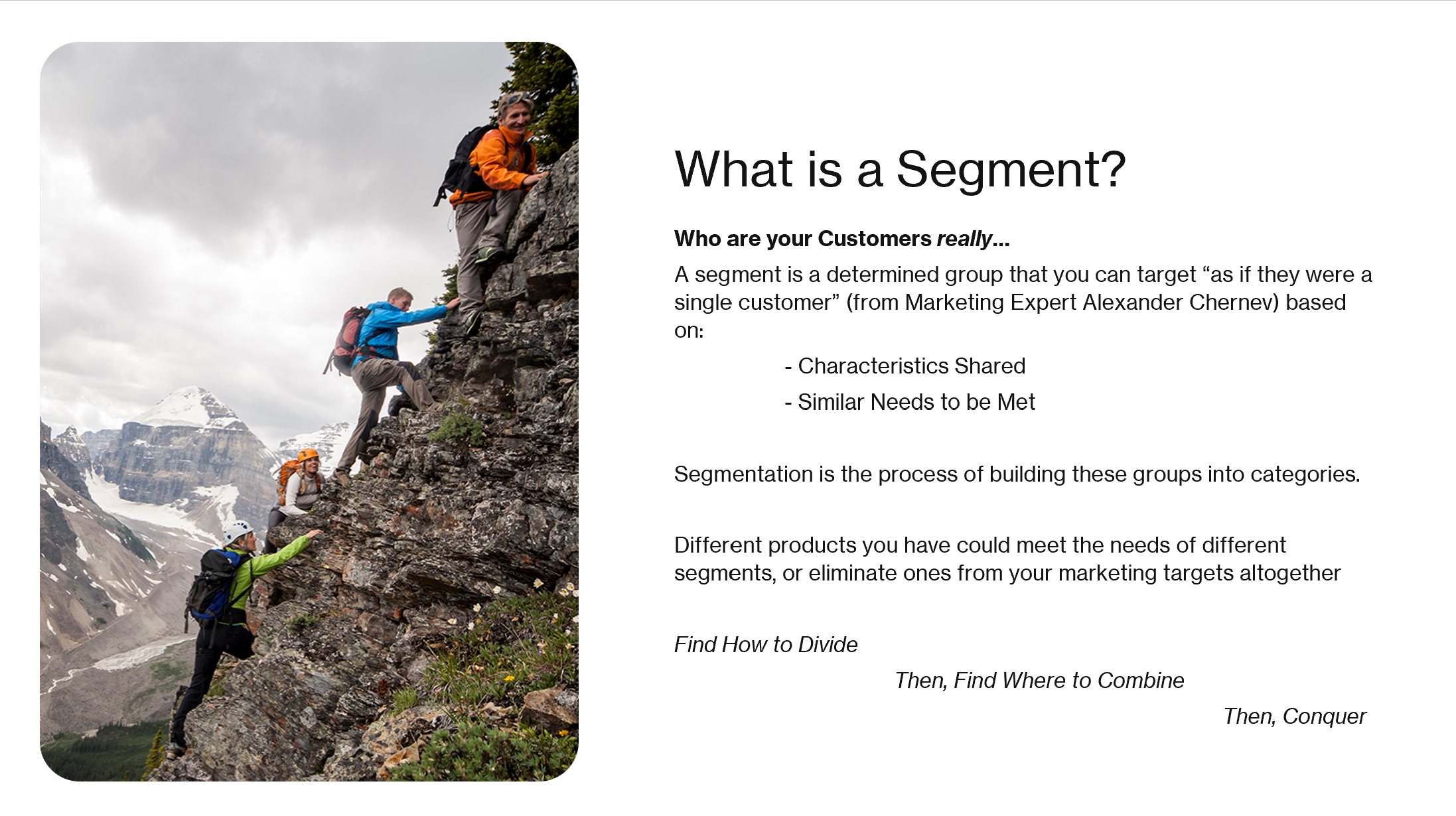
Segmentation means breaking your market into smaller groups to find potential users. In my business plan template, we do this with a user persona exercise. We also group people by similar characteristics.
For example, if you sell a product to rock climbers, it might suit a novice who is interested in new technology and AI. That person might be inspired by athletes like the olympian Janja instead of legendary Tommy Caldwell (sorry Tommy), which suggests they are younger, maybe Gen Z. They are also more likely to use TikTok rather than Instagram like older Millennials..
Now, think about Millennials. Maybe your product costs more than average, but Millennials might have the income to afford it. They might also have health insurance plans that cover fitness devices your product works with. That’s another possible segment.
Targeting is the idea of identifying the segments that are potentially interested in your product and deciding which of those segments you should focus on. Aka, what audience gives you the most bang for your buck? Maybe you already have social media or Kickstarter proof of what demographics are already interested in your product to back this up. Or maybe there is a competing company that already addresses one, but the other segment is left hanging? All these are things to consider when deciding which direction to target your marketing.
Choosing a Target Market
So how do you actually choose a target? Consider these steps you can follow (don’t worry, we’ll have an example to help soon):
List your identified market segments (do that segmentation work to get here!)
Evaluate each segment’s size and growth potential. Is it big enough to support your business now? Where might you pivot in the future?
Check the segment’s accessibility. Can you reach this group easily through channels like social media, in-person events, or online communities? Keep in mind your own capacity at this stage.
Assess whether your product truly solves a problem for this segment. Is there a strong match between what you offer and what they need? Is there someone you haven’t considered before?
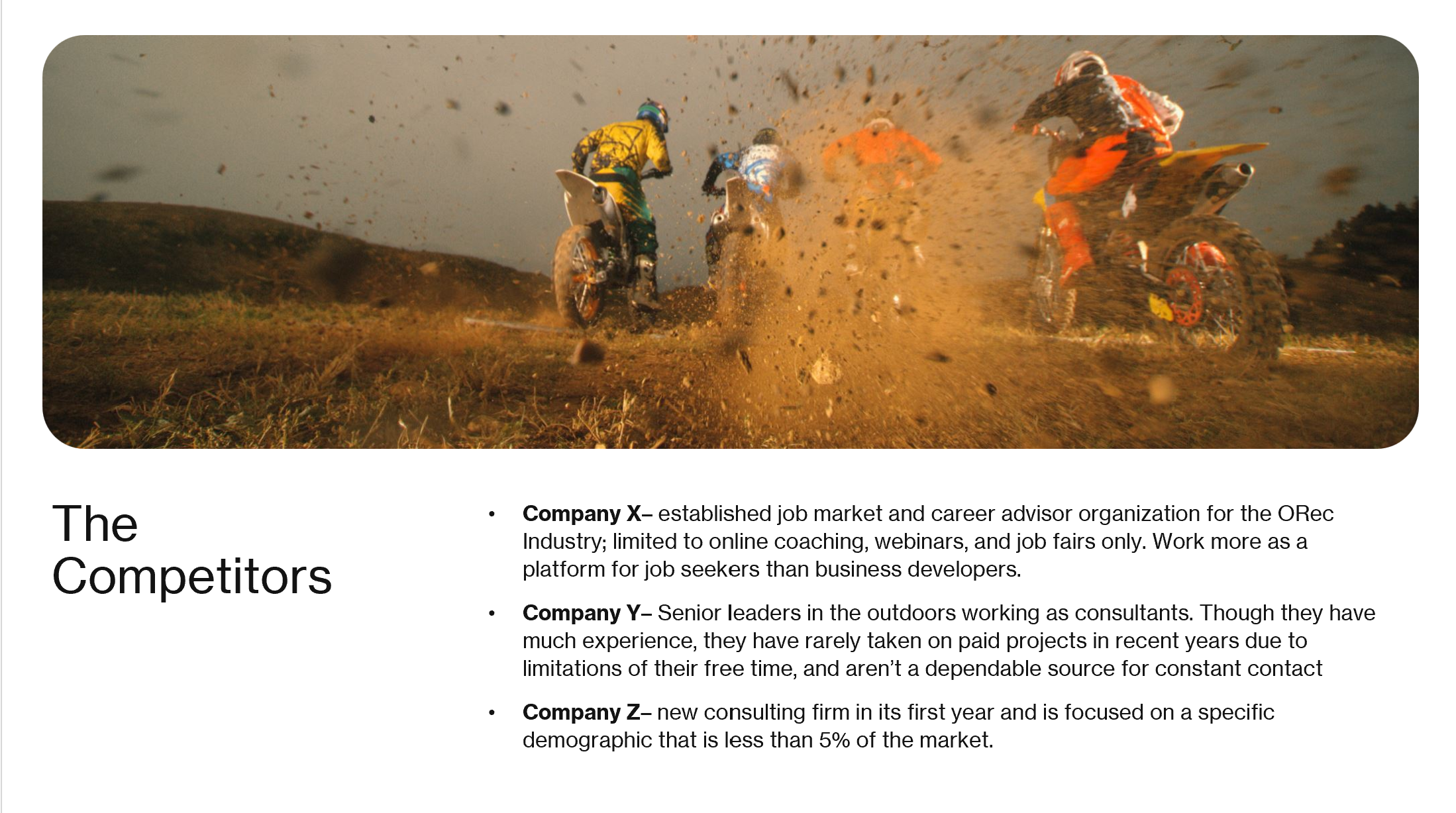
Consider the competition. Is the segment already crowded, or is there a gap you can fill? (Don’t write off crowded; sometimes that means there’s an audience to share if you have the right gap to fill!)
Pick one or two segments that score highest on these points to focus your efforts.
Keep it simple at the beginning and adjust as you gather more feedback.
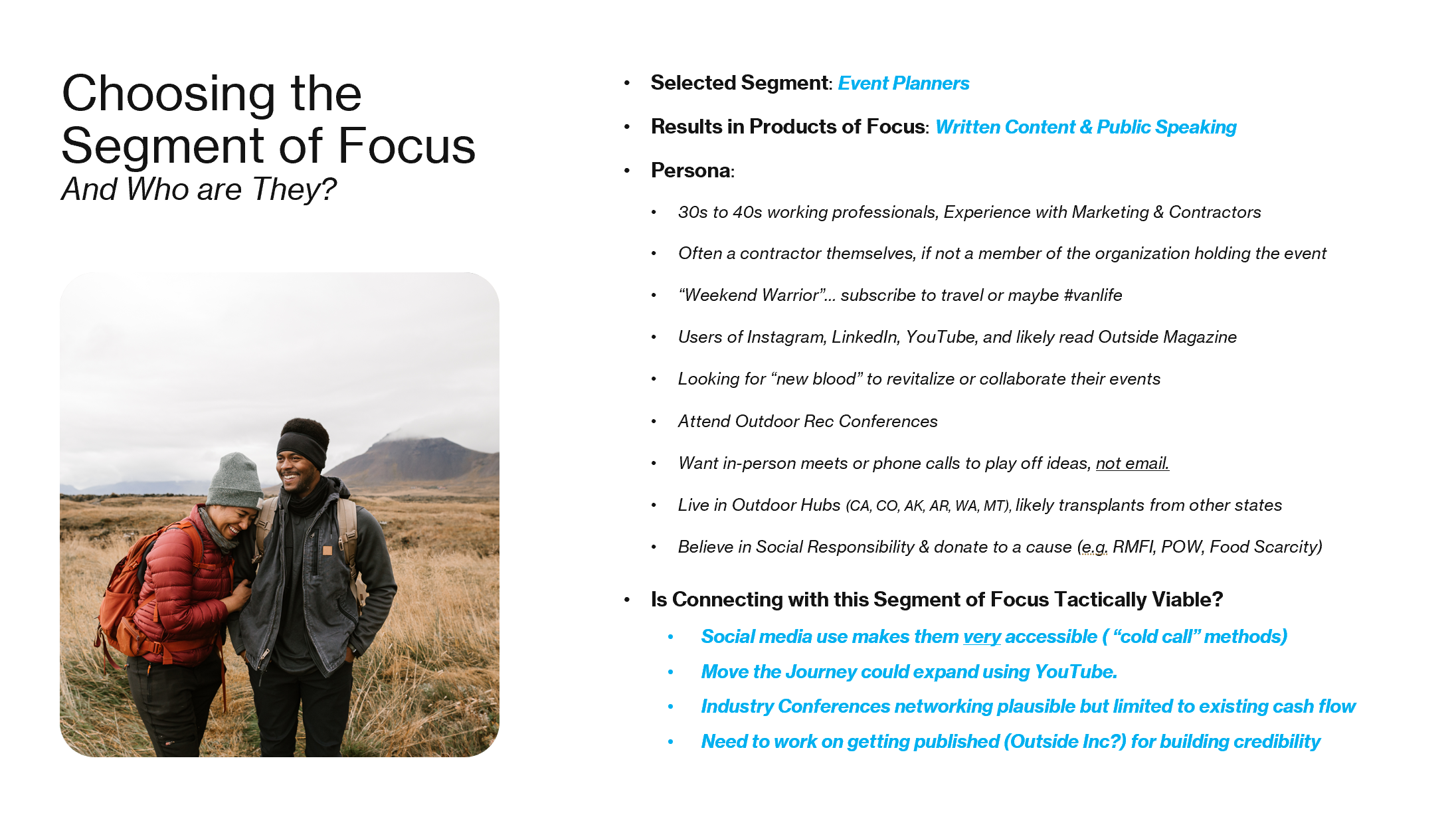
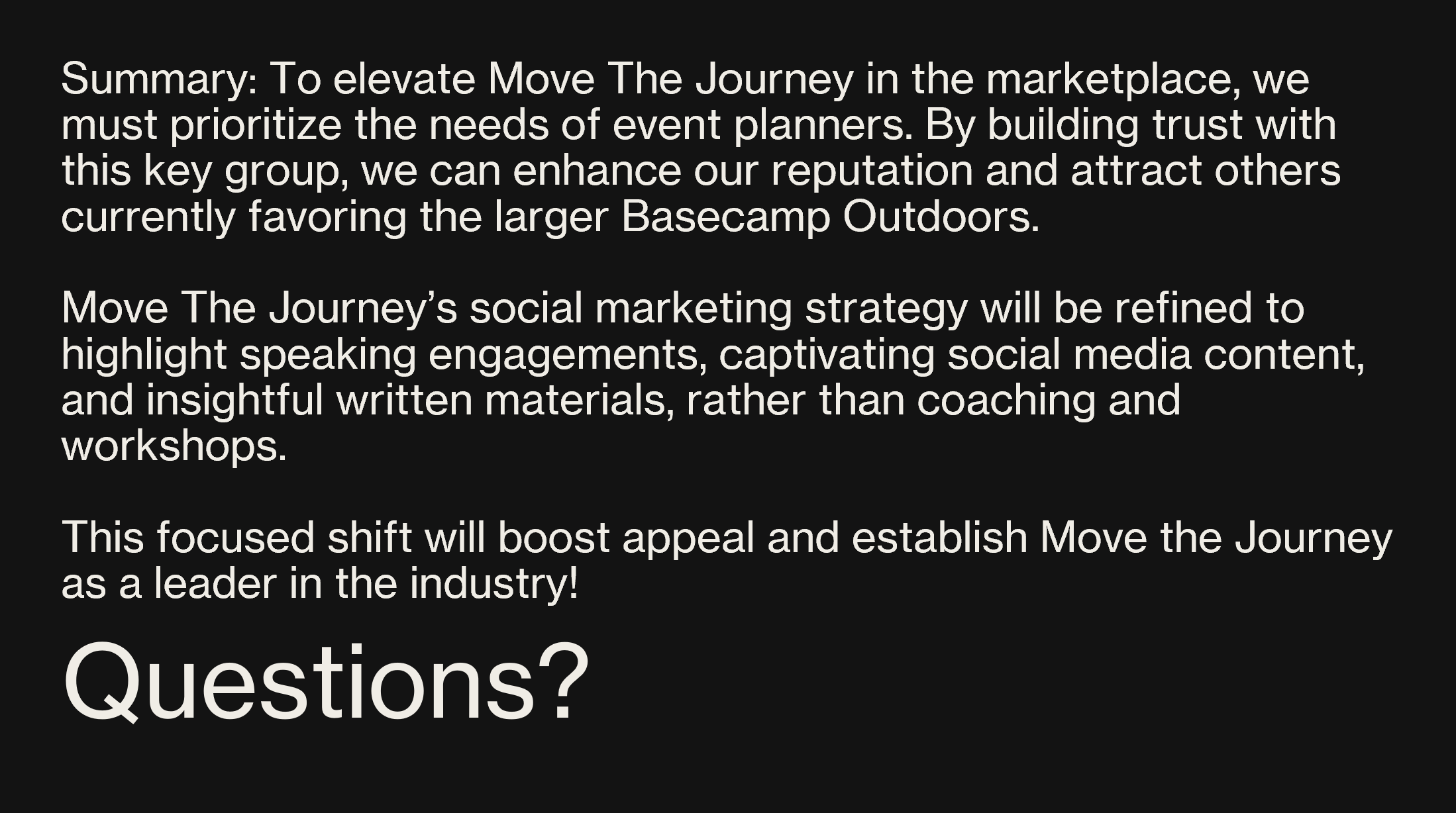
This conversation about building your market structure could get convoluted, so I chose to share my own marketing evaluation. To make this more concrete, let me briefly walk through a real example using Move the Journey.
Real-World Example Using Move the Journey
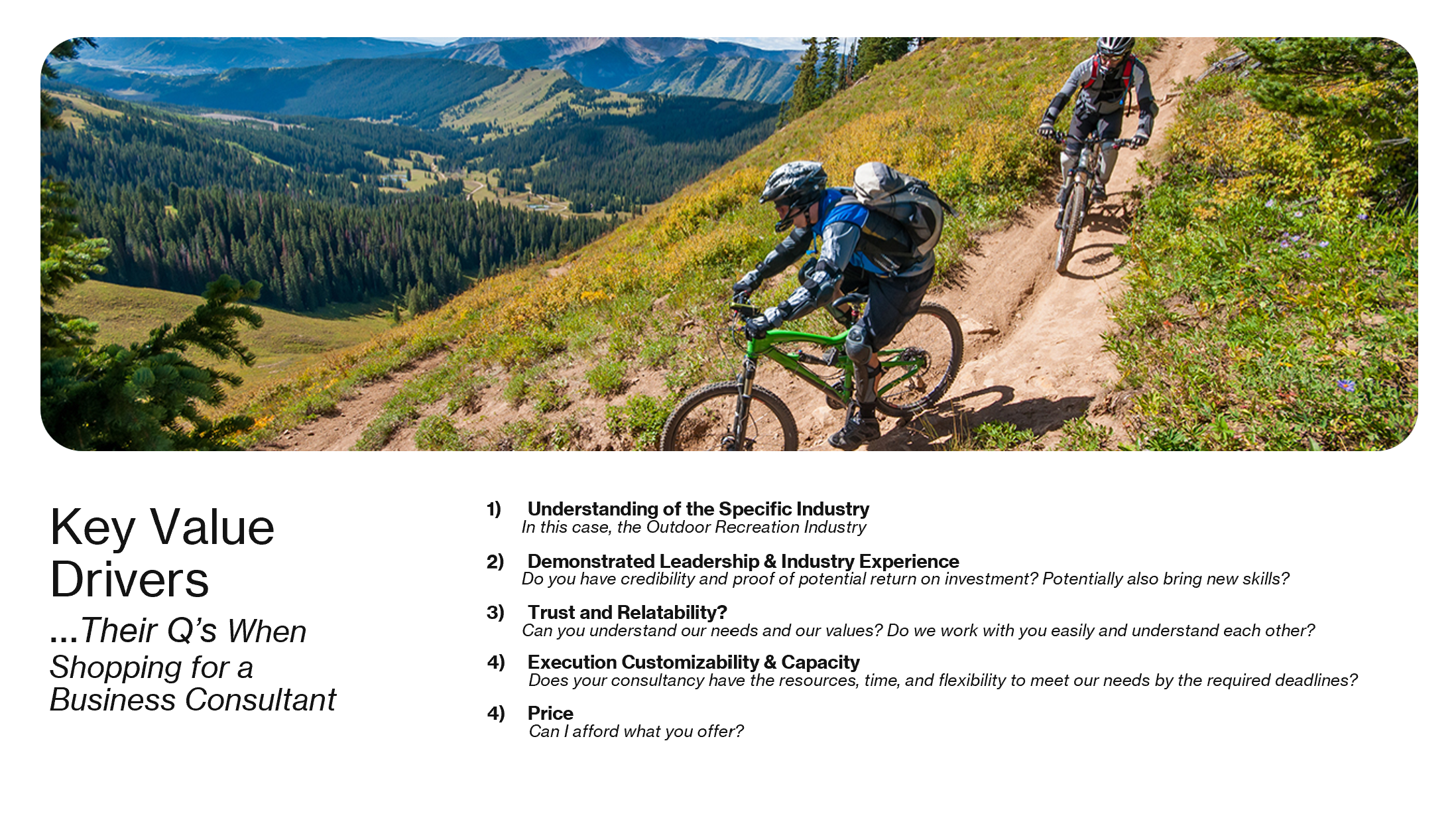
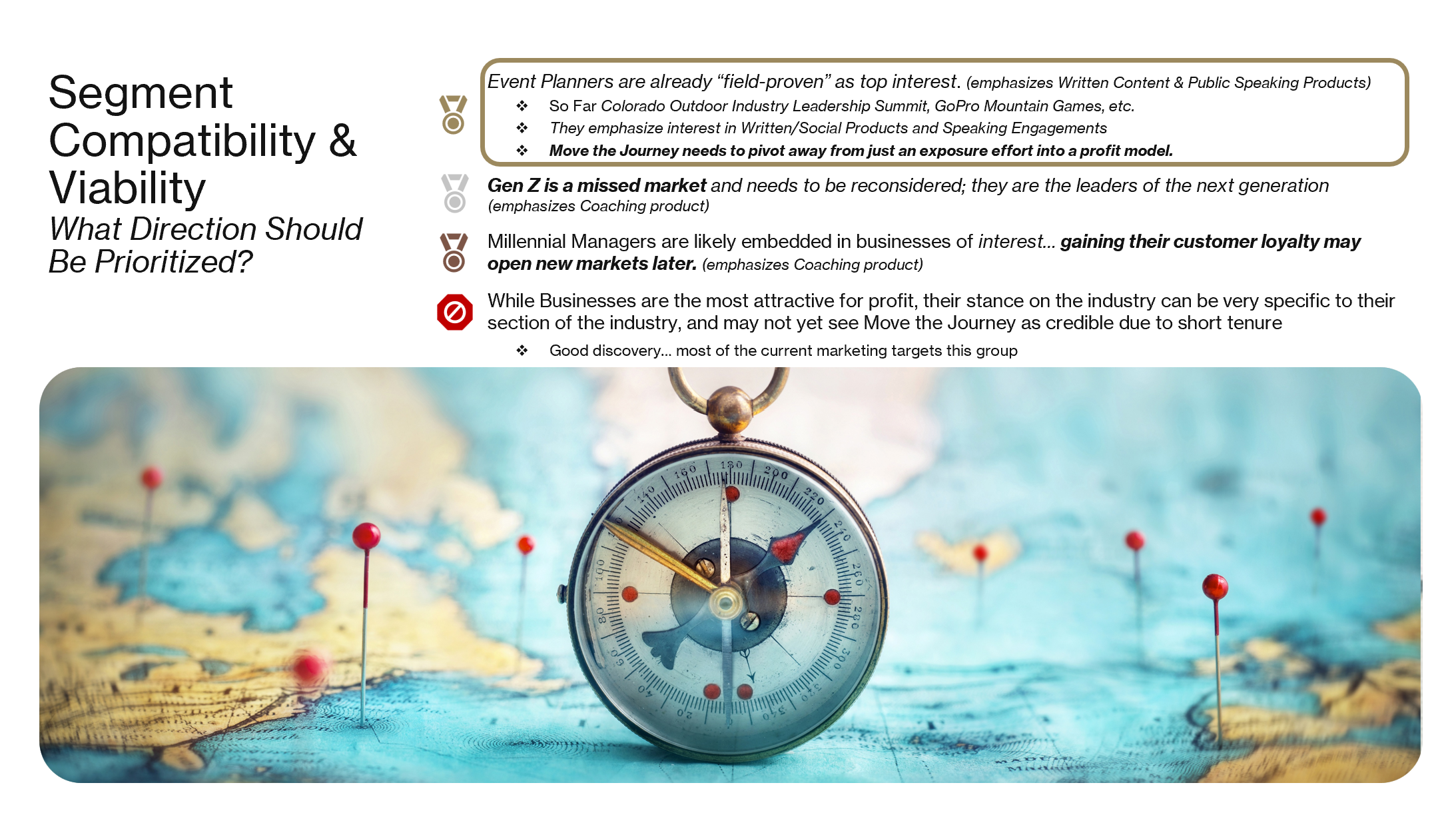
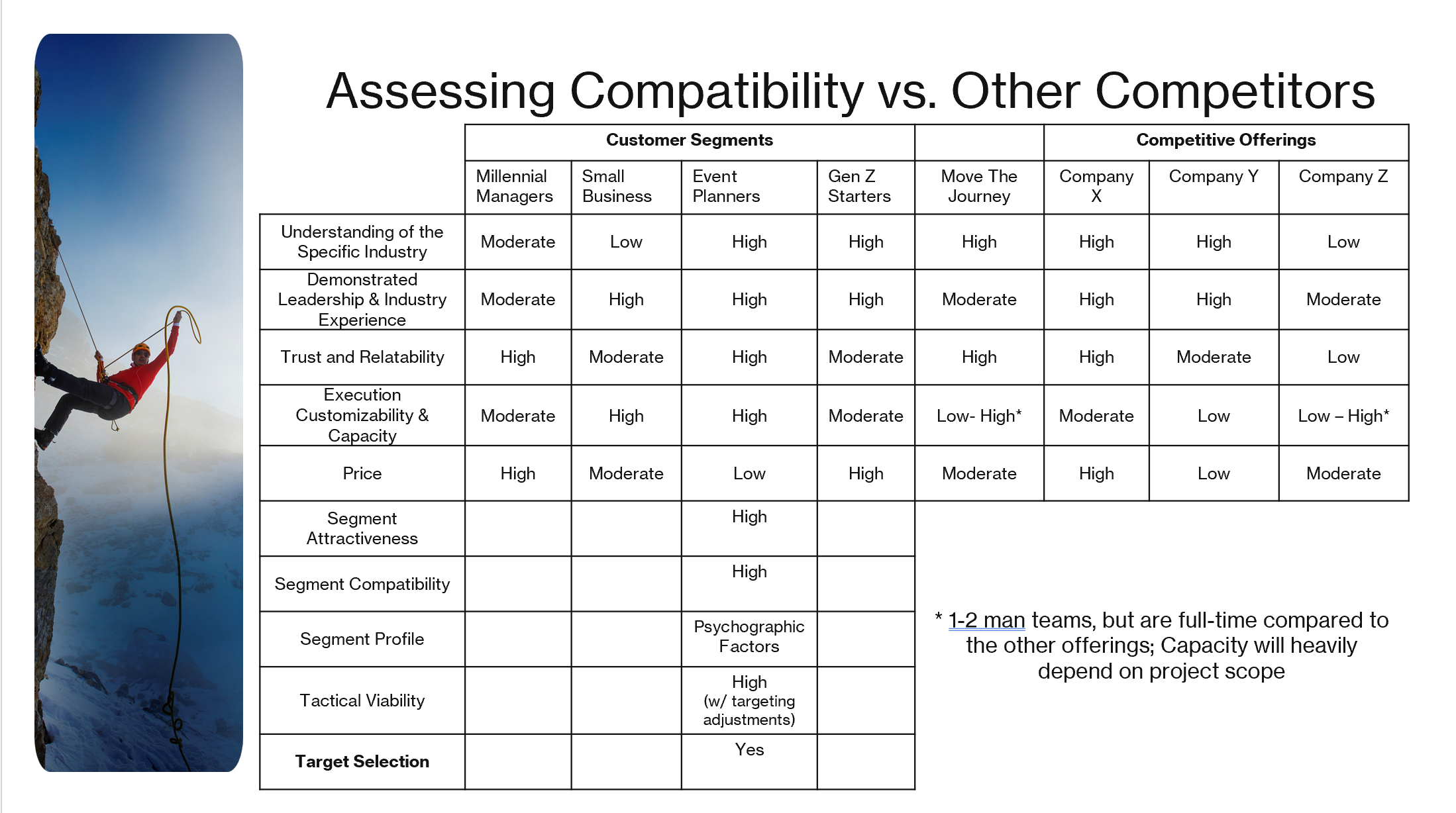
Recently, I segmented my market into four main groups (scroll through to check em out!). I then evaluated each segment for size, accessibility, and fit. Based on this, I decided who I COULD target my first marketing efforts, based on some ideas I had about revenue streams. (Note: it’s not my target right now, but I can’t give away all my trade secrets!).
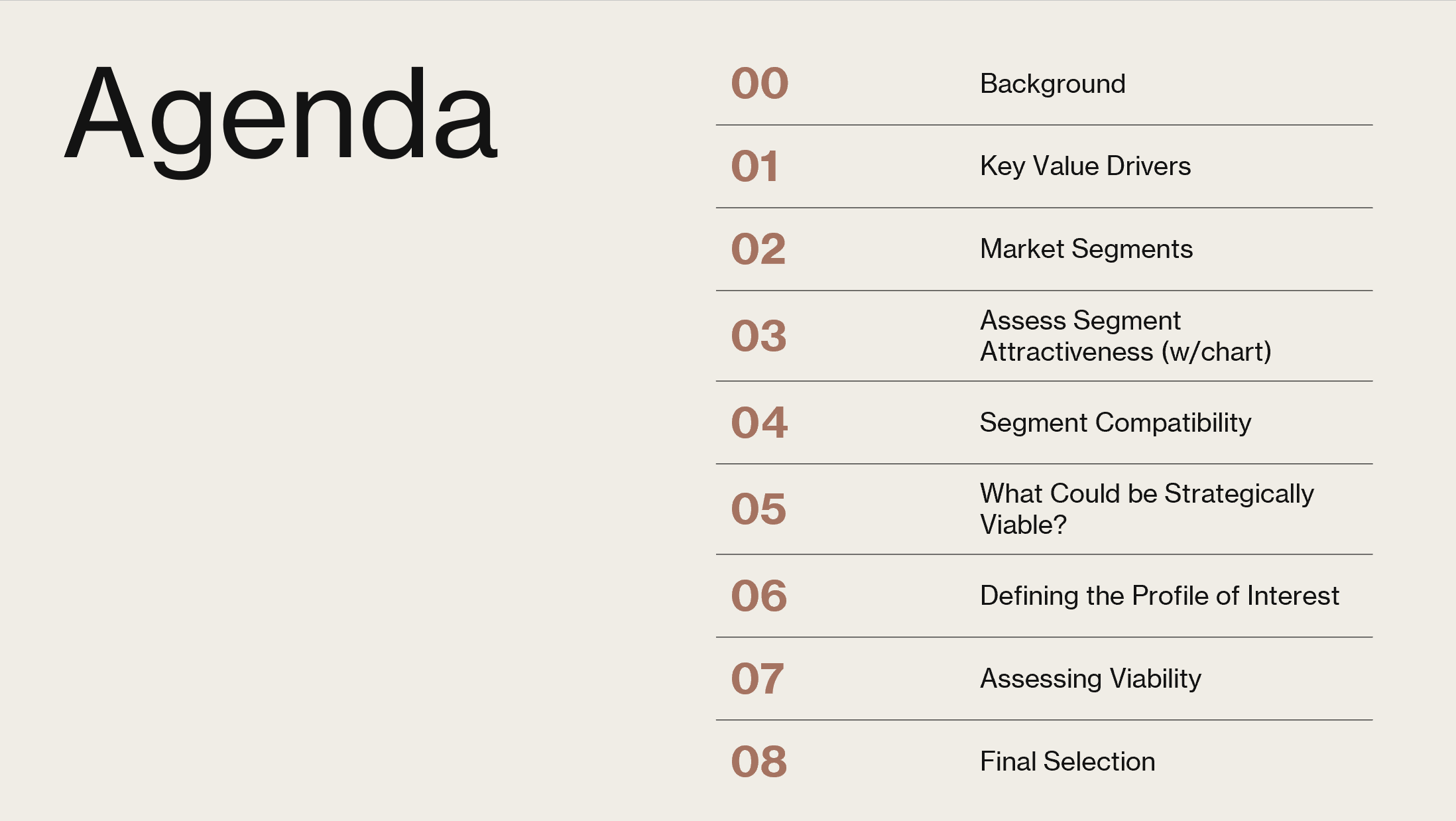
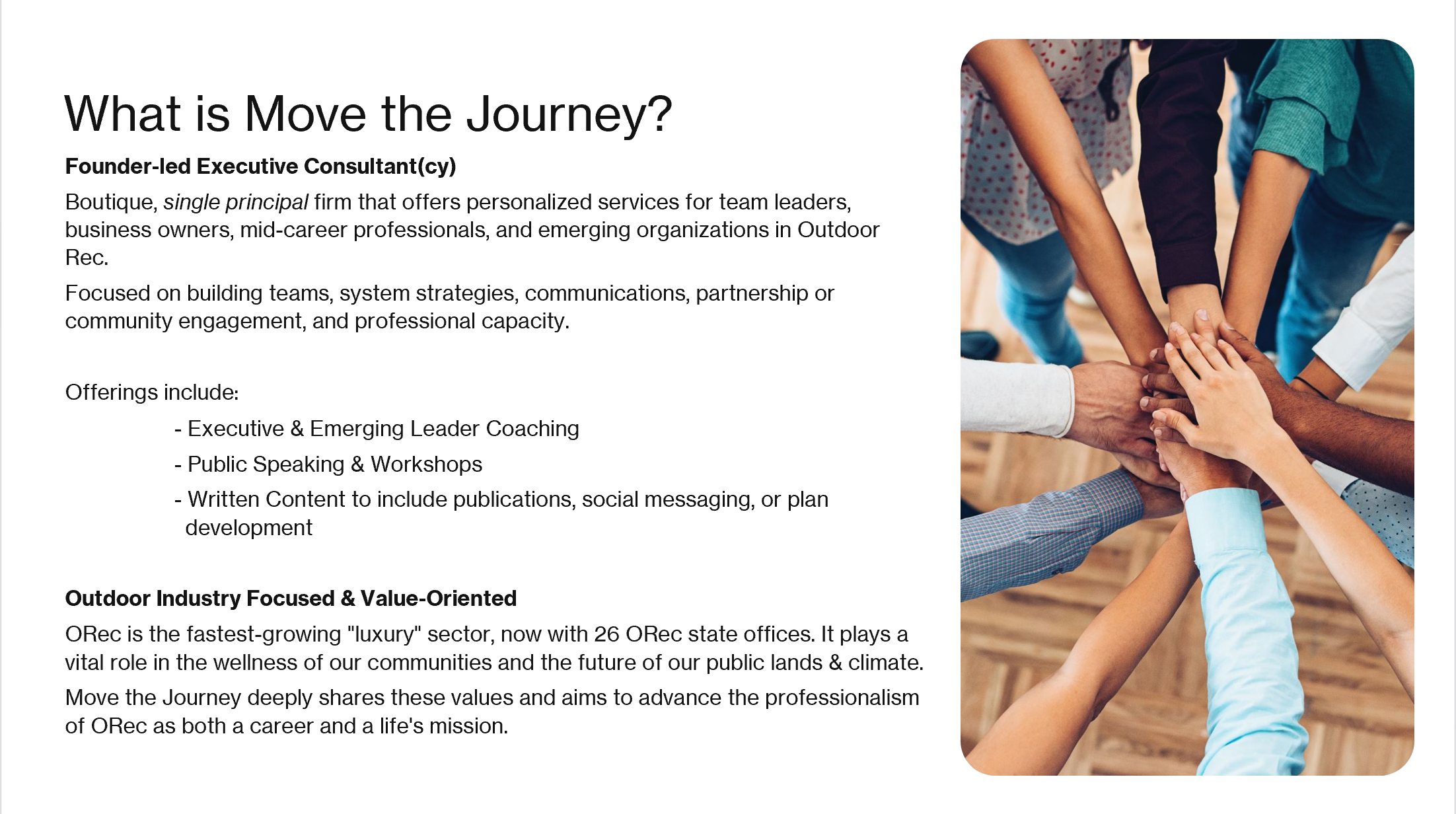
Below are slides using Move the Journey as an example. They show how I define business segments based on current values. The slides also discuss how my business model and competitors can frame my choice of a specific target.
I hope you find this helpful, and stay tuned in for when we have a marketing plan template that you too can follow and fill in the blanks for your own business. Use these ideas to pitch investors, direct your team, or find your next direction, so you’re never lost on the path and always heading in the right direction.
Tools for Your Entrepreneurial Adventure
In the MEANTIME, are you starting a business or brainstorming one? I have a template out NOW that could help you on that endeavor! A step-by-step business plan template, along with commentary and instructions written by me to help you along the way. Whether you’re still in the brainstorming phase or need a plan to present for a loan, this tool will get you there. You’ll even have my email address to answer any questions you may have. You can get it HERE right now, and get your Journey toward business moving forward today.